Free Compound Interest Calculator Online: How Compound Interest Works (2027 Guide)
We answer the five questions people usually ask: what compound interest is, why it matters, how to use it, when it helps or hurts, and whether it is good or bad.
Compound interest is interest that earns interest. This guide explains how it works in plain English, shows worked 2027 examples with monthly deposits, and points you to a free online calculator so you can test your own numbers in seconds.
Free online tool: use our free Compound Interest Calculator. No signup, works on any phone.
What is compound interest?
Compound interest means each interest payment is added to your balance, and the next payment is calculated on that larger balance. Simple interest, by contrast, is only ever calculated on the original amount. Over a few months the two look almost identical. Over many years, compounding can produce noticeably more.
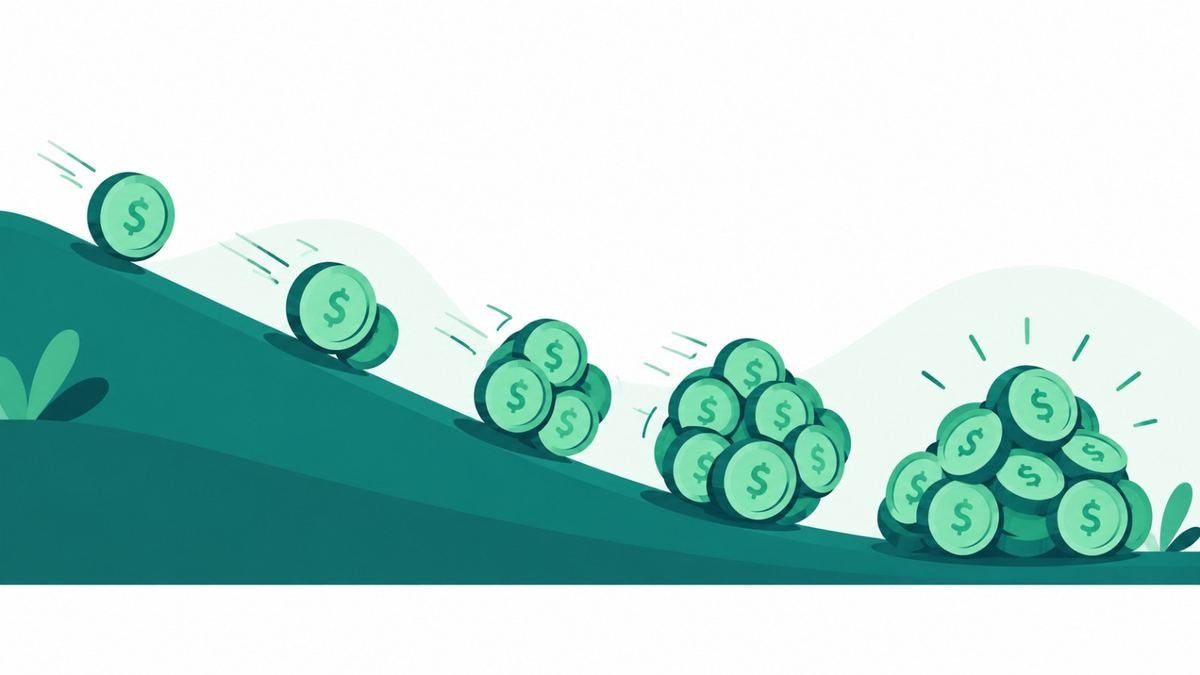
Think of a snowball: it picks up more snow as it rolls because it has a bigger surface. Your balance behaves the same way when interest is left in the account.
Why does compound interest matter?
Compound interest matters because it changes how time and money interact. With simple interest, growth is a straight line. With compounding, growth curves upward, so the later years add more than the early ones. That is why the same rate can produce very different results depending on how long the money is left alone.
A concrete example: $5,000 at 6% a year, compounded monthly, becomes about $16,550 after 20 years. The balance more than triples even though no new money was added. For regular savers, this is the reason small, steady deposits are worth the effort: each one gets its own time to grow.
It also matters because the same maths works against borrowers. Understanding it helps you decide where your money works for you and where it works against you.
The compound interest formula
For a single deposit, the standard formula is A = P × (1 + r/n)^(n×t), where P is the starting amount, r is the annual rate as a decimal, n is how many times per year interest is added, and t is the number of years.
With regular deposits, each contribution grows for the time it stays in the account. Our online calculators handle this period by period: the balance is multiplied by the growth for that period, then the contribution is added. Contributions are assumed to be made at the end of each period, which is a common and slightly cautious assumption.
Compound interest example: $10,000 at 5% for 10 years
Here is how the same $10,000 and 5% annual rate behave under different methods over 10 years:
- Simple interest: $15,000 (exactly $500 a year).
- Compounded annually: about $16,289.
- Compounded monthly: about $16,470.
- Compounded daily: about $16,487.
Notice two things. Compounding beats simple interest by more than $1,200 here, but going from monthly to daily compounding adds only a small amount. How often interest is added matters much less than the rate and the time.
How does compound interest work with monthly deposits?
This is the question most savers really care about. Suppose you start with $10,000 and add $200 every month at 5%, compounded monthly, for 10 years:
- Total you put in: $34,000 ($10,000 plus 120 deposits of $200).
- Estimated balance: about $47,500.
- Interest earned: about $13,500.
Each deposit starts earning as soon as it lands, so early deposits do more work than later ones. If you want to see how your own contribution changes the result, try our free compound interest calculator and change one input at a time.
Why starting early matters
Time is usually the biggest lever. Imagine saving $200 a month at 5% compounded monthly. Over 30 years you would deposit $72,000 and end with roughly $166,000. Over 40 years you would deposit $96,000 and end with roughly $305,000. Ten extra years add only $24,000 of deposits but around $139,000 of extra balance in this example.
These are illustrations, not predictions. Real rates change, but the pattern holds: more time gives compounding more room to work.
The Rule of 72
A quick mental shortcut: divide 72 by the annual rate to estimate how many years it takes money to double. At 5%, 72 ÷ 5 is about 14.4 years. The exact figure with monthly compounding is closer to 13.9 years. It is a rough guide, useful for sanity-checking results.
When does compound interest work for you, and when against you?
When it works for you: whenever your money sits in an account that adds interest to the balance, such as a savings account or a certificate of deposit. The longer you leave the interest in, the more it compounds. Investment returns can compound too, but they are not guaranteed the way a fixed savings rate is, so treat them separately.
When it works against you: on debt. If a balance carries interest that is added to what you owe, the amount can grow quickly. For example, $2,000 at 20% a year compounded monthly, with no payments for two years, grows to about $2,974.
When the interest is added: that depends on the account terms. Many savings accounts compound daily or monthly and credit the interest monthly. Check the terms of your own account.
Compound interest: good or bad?
The honest answer is that it is neither. It is a mechanism, and whether it feels good or bad depends on which side of it you are on.
The good:
- It rewards patience: leaving interest in the account lets it earn more interest.
- It is automatic: once set up, it needs no effort.
- It amplifies regular deposits over long periods.
The bad:
- On debt, it can make balances grow faster than expected if payments are small.
- If your rate is lower than inflation, your balance can grow while its buying power falls.
- Fees and taxes can eat into the growth.
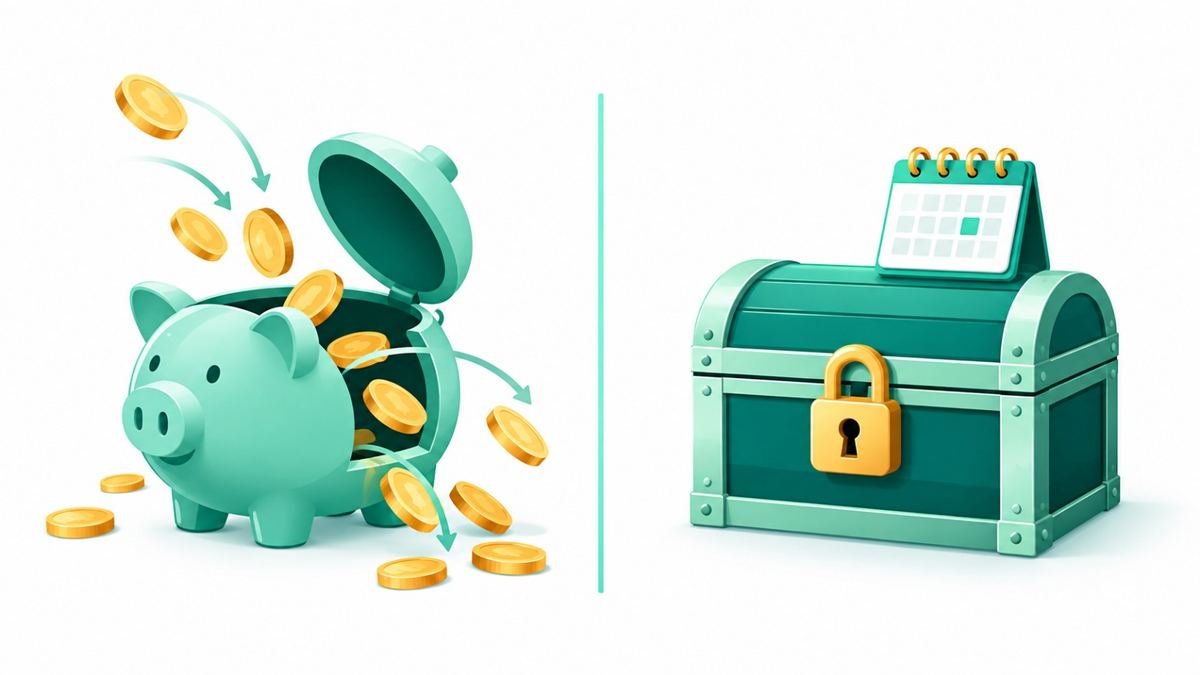
- Withdrawing interest early means less compounding.
A sensible approach is to let compounding work on savings, and to be aware of it when borrowing.
How to make compound interest work for you
- Start now. Time is the largest factor, so an early small deposit often beats a later large one.
- Deposit regularly. Automating a monthly transfer keeps the habit going.
- Leave the interest in. Reinvesting it is what creates compounding.
- Compare accounts by APY and fees. APY includes compounding, which makes offers easier to compare.
- Deal with expensive debt. If a debt costs more than your savings earn, reducing it can be worth more.
- Check your progress. Use the calculator every few months and adjust.
How to use the free online compound interest calculator
- Enter your starting balance (use 0 if you are starting fresh).
- Enter the interest rate or APY quoted by your bank.
- Choose the compounding frequency shown in your account terms.
- Enter the number of years and any regular contribution.
- Read the final balance, total contributions and interest earned, then check the year-by-year table.
No signup is needed, and the numbers you enter stay in your browser. Use the share button to send a friend the same scenario.
Limits to keep in mind
Calculators assume a steady rate. Real accounts may change rates, charge fees, or pay interest on a different schedule. Taxes on interest can also reduce what you keep, depending on where you live. Treat the result as a planning estimate and confirm details with your provider.
Frequently asked questions
How does compound interest work with monthly deposits?
Each deposit is added to the balance and starts earning interest from the next period. The calculator multiplies the balance by the growth for each period and then adds your deposit.
Is there a free compound interest calculator online?
Yes. Our compound interest calculator is free, needs no signup and runs in your browser.
What is the compound interest formula?
A = P(1 + r/n)^(nt) for a single deposit. With regular deposits, each contribution is grown for the time it remains in the account.
Does daily compounding beat monthly compounding?
Slightly. In the $10,000 at 5% for 10 years example, daily compounding ends about $17 higher than monthly. The rate and time matter far more.
Is compound interest guaranteed?
No. Rates can change and taxes and fees may apply, so results are estimates.
Is compound interest good or bad?
Neither by itself. It helps savers because interest earns interest, and it hurts borrowers because owed interest can grow.
When does compound interest start?
As soon as interest is added to the balance, which depends on the account terms, for example daily or monthly.
Try these free calculators
Compound Interest Calculator
Watch principal, contributions and interest build on each other over time.
Calculate Now →Daily Savings Calculator
See what small daily contributions can add up to.
Calculate Now →APY Calculator
Convert an interest rate and compounding frequency into APY.
Calculate Now →