Simple Interest Calculator 2027: Free Online Tool
Interest calculated on the original principal only.
Use the free simple interest calculator above to work out interest calculated only on the original principal — no compounding involved. This is the calculator to use for loans, short-term products, or any situation that explicitly states simple interest rather than compound interest.
Below, we explain the formula in full, walk through a checkable example, and compare it directly with compound interest so you can see exactly how the two differ.
Formula and assumptions
A = P(1 + rt), interest = P × r × t
Estimates only. Actual growth can differ because rates may change, taxes may apply, and institutions may calculate interest differently.
What Is Simple Interest?
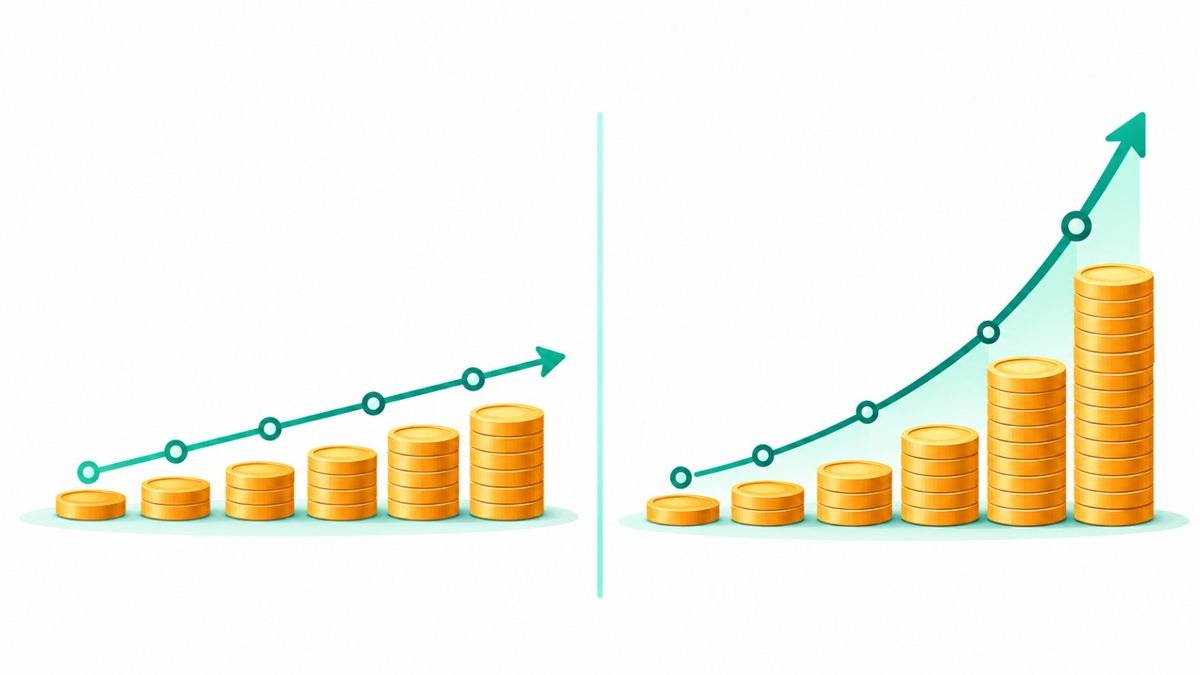
Simple interest is interest calculated only on the original principal amount, for the entire time period, with no interest ever added to the base for future calculations. This makes it different from compound interest, where interest is calculated on the principal plus all interest already earned, so the base grows over time.
How Does This Simple Interest Calculator Work?
You enter a principal, an interest rate, and a time period in years. The calculator multiplies these three figures together to find the total interest, then adds that to your principal to show the final amount — a single, one-step calculation with nothing compounding along the way.
Simple Interest Formula
A = P × (1 + rt)
Or, to find just the interest amount:
Interest = P × r × t
- A = the final amount (principal plus interest)
- P = the principal (starting amount)
- r = the annual interest rate (as a decimal, so 6% is 0.06)
- t = the time period in years
How to Use the Simple Interest Calculator
- Enter the principal — the starting amount.
- Enter the interest rate as a percentage.
- Enter the time in years.
- Read your result: interest earned and the final total amount.
Simple Interest Calculator Example
$8,000 at 6% for 4 years:
| Input | Value |
|---|---|
| Principal | $8,000 |
| Interest rate | 6% |
| Time | 4 years |
Calculation: Interest = $8,000 × 0.06 × 4 = $1,920. Final amount = $8,000 + $1,920 = $9,920.
For comparison: the same $8,000 at 6% for 4 years, compounded annually instead, would grow to about $10,100 — $180 more than the simple interest result, purely because compound interest also earns interest on the interest already added each year.
A smaller example: $2,000 at 5% for 3 years: interest = $2,000 × 0.05 × 3 = $300, for a final amount of $2,300.
Why Use This Simple Interest Calculator?
- It matches products that genuinely use simple interest, such as some short-term or specialty loans.
- It is easy to verify by hand — a single multiplication, unlike compound interest which requires an exponent.
- It provides a clean baseline for comparing against compound interest on the exact same numbers, showing exactly what compounding adds.
When Should You Use a Simple Interest Calculator?
- A loan or financial product explicitly states simple interest in its terms.
- You are learning the concept for a class or exam and want a formula simple enough to check by hand.
- You want to see the baseline "no compounding" case before comparing it with a compound interest projection for the same numbers.
What Does the Result Mean?
Interest earned is the total interest accumulated over the full period, calculated only on the original principal. Final amount is your principal plus that interest. Because simple interest never compounds, the interest earned each year is always identical — in the example above, exactly $480 a year, every year, for all 4 years.
Common Mistakes When Using a Simple Interest Calculator
- Using this calculator for a compounding account. Most savings accounts compound, so using simple interest here will understate the true result — use the Compound Interest Calculator instead for those.
- Entering the rate as a whole number instead of a decimal when checking the formula by hand — remember 6% is 0.06, not 6, inside the formula.
- Forgetting to convert months into years for t, if your time period is given in months.
Tips for Working With Simple Interest
- Always confirm which method a loan or account actually uses before comparing offers — the terms should say "simple" or "compound" explicitly.
- Use the same numbers in the Compound Interest Calculator to see the gap for yourself, especially for loans or investments running more than a couple of years.
- Remember the yearly interest is constant under simple interest, which makes budgeting for a simple-interest loan payment more predictable than a compounding one.
Related Financial Concepts
- Compound interest — interest calculated on principal plus prior interest; see the Compound Interest Calculator and full comparison guide.
- Principal — the original amount before any interest is added.
- APR — a rate quoting convention often used for loans, which may or may not include compounding depending on the product.
Why Some Loans Still Use Simple Interest
Simple interest might look less favorable to a lender than compound interest, since it never earns interest on interest, which is exactly why some shorter-term or consumer-friendly loan products use it: the cost to the borrower is easier to predict and typically lower than an equivalent compounding arrangement. Certain auto loans and some personal loans calculate interest on the remaining principal in a way that behaves similarly to simple interest over the loan's term, so the total interest paid is more transparent. When you are comparing loan offers, checking whether a lender uses simple or compound interest, alongside the headline rate, can reveal a meaningfully different true cost even when two rates look identical on paper.
Frequently asked questions
Is this simple interest calculator free?
Yes, completely free with no signup required.
What is the simple interest formula?
A = P(1 + rt), or Interest = P × r × t, where P is the principal, r is the annual rate as a decimal, and t is time in years.
How much interest will $8,000 earn at 6% for 4 years?
Using simple interest: $8,000 × 0.06 × 4 = $1,920 in interest, for a final total of $9,920.
Is simple interest better than compound interest?
For borrowers, simple interest usually costs less since interest never compounds. For savers, compound interest usually earns more over time. Neither is universally "better" — it depends on which side of the transaction you are on.
Where is simple interest actually used?
Some short-term loans and certain daily-balance loan products use simple interest. Most savings accounts and many other loans use compound interest instead — always check your specific product terms.
Does simple interest change each year?
No, the yearly interest amount is always the same under simple interest, since it is calculated only on the unchanging original principal.
How is simple interest different from compound interest?
Simple interest is calculated only on the principal; compound interest is calculated on the principal plus all previously added interest, so it grows faster over time. See our detailed comparison.
Can I use this calculator for a loan I am paying off with monthly payments?
This calculator assumes a single lump sum over the full period with no payments in between; a loan paid off with regular instalments needs an amortization calculation instead.
What does "t" mean in the simple interest formula?
It is the time period, expressed in years. If your time period is given in months, divide by 12 to convert it to years first.
Does this calculator account for taxes?
No, the result is shown before any tax that may apply to interest earned or paid, depending on your situation.
Guides for this calculator

Related calculators
CD Calculator
Estimate a certificate of deposit balance at maturity.
Calculate Now →Inflation Savings Calculator
Estimate how inflation could change purchasing power.
Calculate Now →College Savings Calculator
Compare projected savings with an inflation-adjusted college cost.
Calculate Now →Vacation Savings Calculator
Work out the monthly amount needed for your trip.
Calculate Now →